Platform
Plan AI agent workflows with acceptance evidence
Use a dependency-aware REI Skills plan, define what each step must produce and keep planned work separate from completed verification.
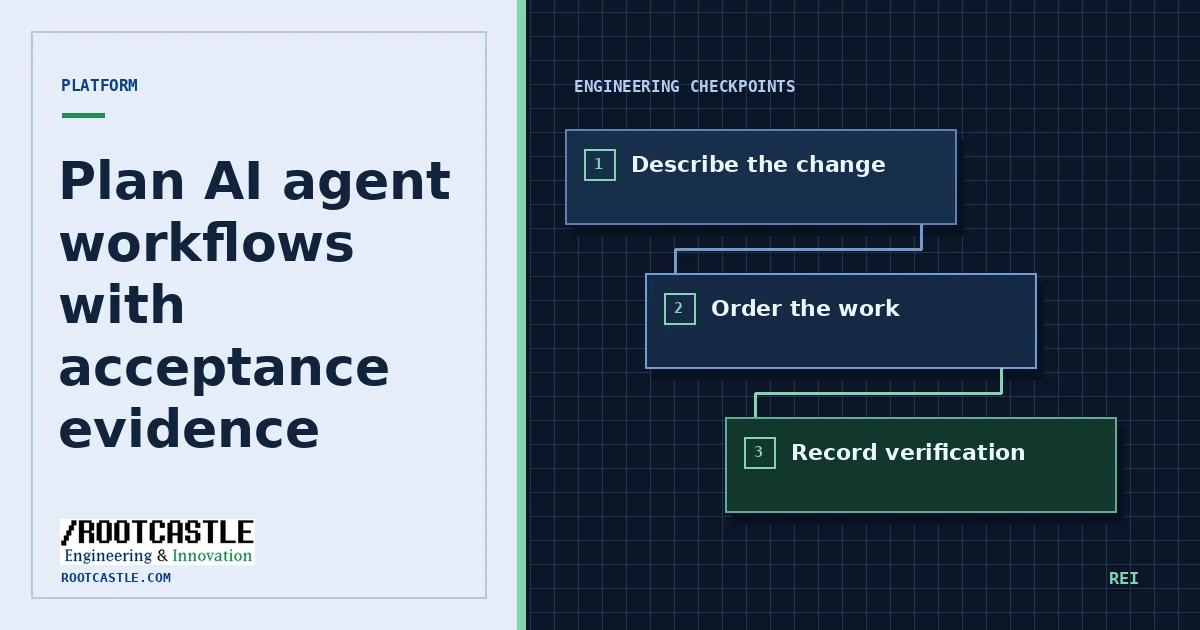
Define the unit of work
A workflow plan is most useful when it starts from a bounded change. “Accept late telemetry and keep daily totals stable” gives a team a behavior to verify. Name the inputs, tools, and deliverable with its owners. If work involves production or physical equipment, record the operator and required approval separately.
The planner takes a task description and file hints and returns an ordered proposal. Inspect the JSON before relying on it. It helps an agent distinguish dependencies, expected artifacts and checks, while the actual runtime evidence must come from the tools that did the work.
Turn each dependency into a handoff
List what each step receives and what it should emit. For ingestion, the schema and timestamp policy come before the test fixtures. A later aggregate comparison consumes the ingest result and a written accounting rule for discarded records. Preserve the input revision and result files so a second reviewer can reproduce the handoff.
Assign responsibilities where a tool is unavailable. A software dry run can record what would execute and which files are involved. A machine operator can then perform a separately authorized test and attach scoped evidence.
npx rei-skills@6.6.1 plan "Verify duplicate telemetry replay" --files replay.csv --jsonWrite acceptance criteria before execution
Make each check measurable and record the command or inspection that produced the result. A useful test asks whether duplicates change an aggregate, whether a window closes at the exact boundary, or whether a known invalid row lands in quarantine. Capture both the expected result and what actually happened.
Record missing capabilities as pending checks. If a release must proceed with a known gap, make the release decision explicit and name the rollback trigger. Let the evidence record show who ran the check and under which version.
Repeat after a change
Use baseline and patched runs on the same fixture. Archive enough metadata to identify the commit, dependency versions and test input. For a subsequent revision, repeat high-risk checks and add one regression case for the behavior that changed.
Skills in the catalog
Repository sources
References are pinned to the same upstream commit as the public catalog.